The conversation you're avoiding is costing you.
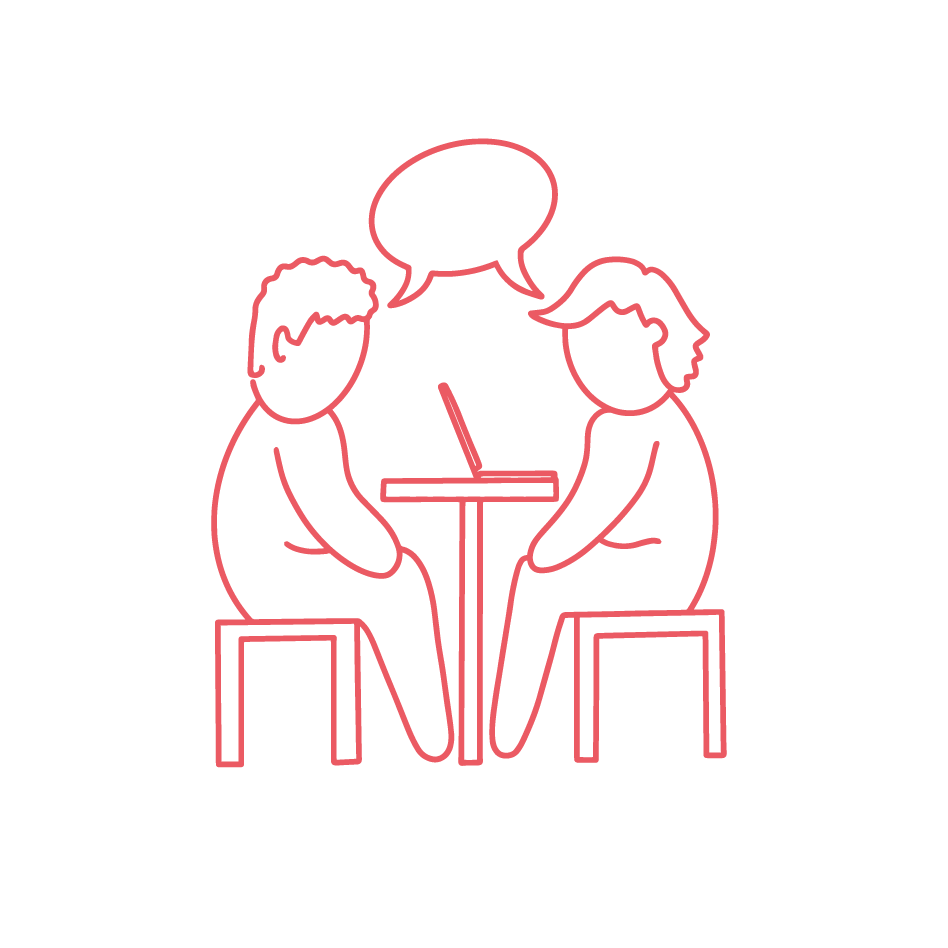
Before every difficult conversation most of us do the same silent calculation: is this worth it? Add in the discomfort of speaking up against staying quiet and quiet usually wins. It feels safer.
What avoidance actually costs
Conflict at work is common and rising. A survey by Acas found 44% of working-age UK adults experienced conflict at work in the past year which is the highest level ever recorded. Almost one in five employees took no action about it at all (Acas, 2025). The CIPD's Good Work Index tells a similar story: a quarter of UK employees experienced workplace conflict in the past year, and only around a third felt it was ever fully resolved (CIPD, 2024; CIPD, 2024). As the CIPD put it, a lot of workplace conflict is simply let go which points less to a skills gap than to a lack of confidence among managers to address it constructively.
That avoidance carries a real, measured cost. The price of workplace conflict to UK employers at £28.5 billion a year (an average of just over £1,000 per employee) with nearly half a million employees resigning annually as a direct result (Acas, 2021). More than half of employees who experience conflict report stress, anxiety, or depression because of it, and CIPD data shows they're more than twice as likely to feel exhausted or under constant pressure at work compared with colleagues who haven't experienced conflict (CIPD, 2024).
It compounds, too. Employees who've experienced conflict are roughly twice as likely to be actively considering leaving their job within the next year. They also report markedly lower trust and confidence in senior leadership (CIPD, 2024).
The instinct to avoid isn't a character flaw, it's just a bad practise, made worse by the fact that avoidance rarely looks like avoidance from the inside. It looks like being busy, Being diplomatic or waiting for the right moment.
Fear of the conversation is often worse than the conversation itself. It takes practice, and regulation. The ability to stay steady in your own body while someone else is not steady in theirs is a powerful skill that not many posess.
Why the medium makes it worse.
If avoidance is one half of the problem, the other half is where the conversation happens when we finally have it. And increasingly, that's over email, Slack, or text (channels that strip out almost everything that makes a hard conversation land safely).
This isn't a new observation, but it has a surprisingly rigorous academic basis. In a well-known set of five studies published in the Journal of Personality and Social Psychology, researchers Justin Kruger and Nicholas Epley found that people correctly judge the emotional tone of an email only slightly better than chance while both senders and recipients remain highly confident (around 90% of the time) that they've read it correctly (Kruger, Epley, Parker & Ng, 2005; APA Monitor). The cause, they found, is egocentrism: writers "hear" their own intended tone in their head as they type, and struggle to appreciate how little of that tone actually survives onto the page for someone reading without their vocal inflection, pacing, or expression.
More recent industry survey data suggests this hasn't improved with more digital communication, if anything, the opposite. A 2026 global survey of 7,000 workers by Atlassian found 83% of UK respondents had experienced a work message being misread badly enough to cause real consequences, from damaged colleague relationships to formal reprimands and HR escalation (IT Pro; HR Magazine). This is industry-commissioned research, but the scale and consistency of the finding lines up with the fact that written communication, stripped of tone and delivered with a delay, is simply higher-risk ground for anything emotionally loaded.
The gap nobody's training for
This research tells leaders to move sensitive conversations to voice or video but not how to use their voice once they get there.
Picking up the phone instead of sending an email doesn't automatically fix anything. If the voice on that call is rushed, high, and clipped, it will land just as badly as the email. Tone isn't a nice-to-have layered on top of the right words. It is the message, often more than the words themselves. The pace you speak at, where you let a silence sit, whether your pitch drops or stays braced and high, these are the signals a nervous system reads before it processes a single word of content.
This is really a physiological skill before it's a communication one. You cannot think your way into a calm, grounded voice while your body is bracing for conflict, the regulation has to come first. It's exactly why so many well-intentioned "difficult conversations" frameworks fall flat in the room: they hand people the right language, without ever addressing the nervous system that has to deliver it. It's the piece I focus on with the leadership teams I train, voice and regulation as the delivery mechanism, not an afterthought to the script.

Where to start
None of this requires a personality change. It's a trainable skill, and a small one to begin practising:
Before a hard conversation, take four slow breaths, the longer exhale does more to steady your voice than any script will.
Ask two questions and reflect back what you heard before you offer a single solution. Being understood is what actually de-escaltes conflict not being agreed with.
If it's emotionally loaded, don't write it. Say it out loud, in a voice that's had a moment to settle first.
The conversation your team is avoiding isn't getting easier by waiting. If you'd like to explore what building this capability into your leadership team could look like or if you want help yourself, I'd be happy to talk it through. Drop me an email (jude@speakingworks.co.uk) or book a call.
Sources
Acas — How prevalent is individual conflict at work in Great Britain in 2025?
CIPD — Workplace conflict puts strain on job quality for estimated eight million UK workers (2024)
American Psychological Association Monitor — E-mails and egos
HR Magazine — Nearly 90% Make Costly Miscommunications at Work (2026)